
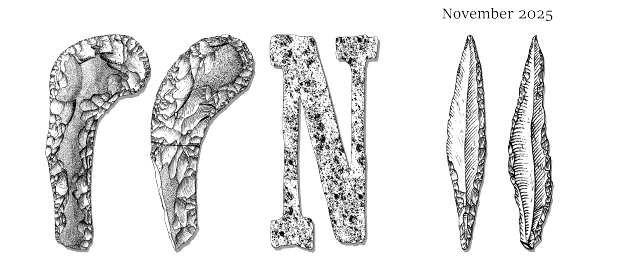
The PPN11 conference will be hosted by the French CNRS Archéorient laboratory at the Maison de l’Orient de la Méditerranée, an institution renowned for its contributions to Neolithic research. Scheduled for November 10–15, 2025, the event promises to continue the tradition of advancing the study of early stone technologies and lithic industries.
Since its inception in Berlin in 1994, under the initiative of Hans Georg K. Gebel and Stefan K. Kozłowski, this workshop series has grown substantially in scope and influence. It now encompasses a wide array of topics, including chipped stone industries, ground and building stones, mineral bead production, and grinding slabs. The previous PPN10 conference highlighted innovative approaches, such as computational and quantitative methods. Today, the PPN series is a cornerstone for archaeologists studying the Neolithisation of the Near East, offering insights into diverse regional developments across the Levant, Zagros, Arabian Peninsula, and Caucasus.
This year’s conference will be held in the Ardèche region of southern France, close to the historic archaeological research center of Jalès. Established by J. Cauvin in the 1980s, Jalès has been a pivotal resource for Near Eastern studies at Archéorient, housing significant archaeological and experimental lithic collections.
In line with PPN conference traditions, PPN11 invites presentations on lithic studies encompassing a broad spectrum of topics. These include:
- Cultural and technical traditions in lithic industries,
- Reconstructions of human activities and skill transmission,
- Exchange systems and the dissemination of goods and ideas,
- Responses to environmental change, and
- New discoveries within the Pre-Pottery Neolithic (PPN) context of the Near East.
We particularly encourage contributions examining the role of lithic industries in shaping Neolithic social organisation. Submissions might explore:
- Tool-making techniques,
- Social roles tied to lithic production and use,
- Patterns of mobility and exchange,
- Functional and symbolic dimensions of lithic tools
- Comparative studies of regional lithic traditions or cognitive aspects of tool complexity.
Additionally, the conference will emphasize the growing importance of experimental archaeology in understanding lithic industries. Early researchers sought to replicate the tools they studied, but contemporary experimental programs delve deeper—investigating the cognitive, physical, and socio-cultural processes that influenced prehistoric societies’ choices in techniques and materials. To advance this critical avenue of research, PPN11 will promote discussions on establishing shared frameworks for studying PPN lithic industries and exchanging experimental reference data. We invite presentations that showcase experimental programs, fostering collaboration and innovation in the study of PPN lithic industries.
Organizing Committee
Archéorient
Archéorient & Lyon 2 University
Archéorient
IMF-CSIC & Archéorient
Archéorient
 PPN11-Jalès